Short answer
Ask for proof you can check yourself: L&I contractor registration, a workers' comp account in good standing, insurance, a written safety program, and a USDOT number for the trucks. Under RCW 51.12.070, a Washington prime can owe a sub’s unpaid workers' comp premiums unless the law’s conditions are met. This is for general contractors.
What do I check first?
Check the sub’s contractor registration with Washington L&I. Use the free Verify tool and search the registration number. The status should be active.
This one has teeth. Under RCW 18.27.020, it is a gross misdemeanor for a contractor to subcontract to or use an unregistered contractor. The same law gives you some cover if the sub was registered when you signed. That cover ends when L&I tells you in writing that the sub is no longer registered.
You can test the tool with our number. Ours is LINDBPG921OE. Our step by step guide is here: how to check an excavation contractor’s license.
These rules are as of November 2026 and cover Washington jobs in Vancouver and Clark County. Confirm with L&I before you rely on them. Oregon has its own CCB rules.
How can I end up owing my sub’s workers' comp premiums?
State law makes the party that lets the contract responsible first. RCW 51.12.070 says the one who lets a contract is “responsible primarily and directly for all premiums upon the work.” In plain words: if your sub does not pay, L&I can look to you.
The same law gives a registered contractor a way out. You are not responsible for a sub’s premiums if all of these are true:
- The sub is a registered contractor, or a licensed plumber or electrician.
- The sub has its own place of business, not one you supply.
- The sub keeps its own books that show its income and costs.
- The sub was hired to do contractor work as the law defines it.
- The sub has a workers' comp account in good standing with L&I, or is self-insured.
L&I’s own handout, Avoid Liability for Your Subcontractor’s Unpaid Workers' Comp Premiums, adds one more. You must not be supervising the sub or its crew. L&I lists things like assigning tasks, keeping time sheets and setting hours. A sub you have to manage hour by hour can cost you this protection.
How do I prove the sub’s account was in good standing?
Check it with L&I and keep a dated record. The statute says you may treat the account as in good standing if you verified it within a year before letting the contract. You must check again at least once a year after that.
The law names the proof. It can be an L&I document with an issue date, or a dated printout from L&I’s website. L&I’s handout says to print the sub’s Certificate of Coverage each year and keep it on file.
L&I also has a tracking request on the Verify tool. Fill one out and L&I will send you a letter if the sub falls behind on premiums or lets its registration lapse within one year.
What numbers and records should I keep on file?
Keep the sub’s legal name, its contractor registration number and expiration date, and its UBI number or L&I account ID. L&I’s handout calls these required records. The UBI is the state business license number.
L&I also says to use written contracts with subs. The contract should explain how you protected yourself from unpaid premiums.
Look up the UBI on the Department of Revenue business lookup. It is linked from the Revenue home page as “Look up a business.”
What insurance paperwork should I get?
Get a certificate of insurance before the sub starts work. The certificate is a one page summary of the sub’s policies. It should show general liability and auto coverage, the limits, and the policy dates.
Ask to be named as an additional insured on the liability policy. That means the sub’s policy also covers you for claims from the sub’s work. Ask for the endorsement page, not just a note on the certificate. The endorsement is the part of the policy that makes it real.
Check the dates against your schedule. A policy that ends mid-job needs a new certificate. The state minimum to be registered is low next to the cost of a commercial site, so set your own limits in the subcontract.
What safety paperwork should an excavation sub have?
A written accident prevention program comes first. WAC 296-155-110 requires each construction employer to have one, in writing, fitted to the work and its hazards. The same rule requires crew safety meetings at the start of each job and at least weekly after that. It also requires a walk-around safety inspection at the start of each job and at least weekly.
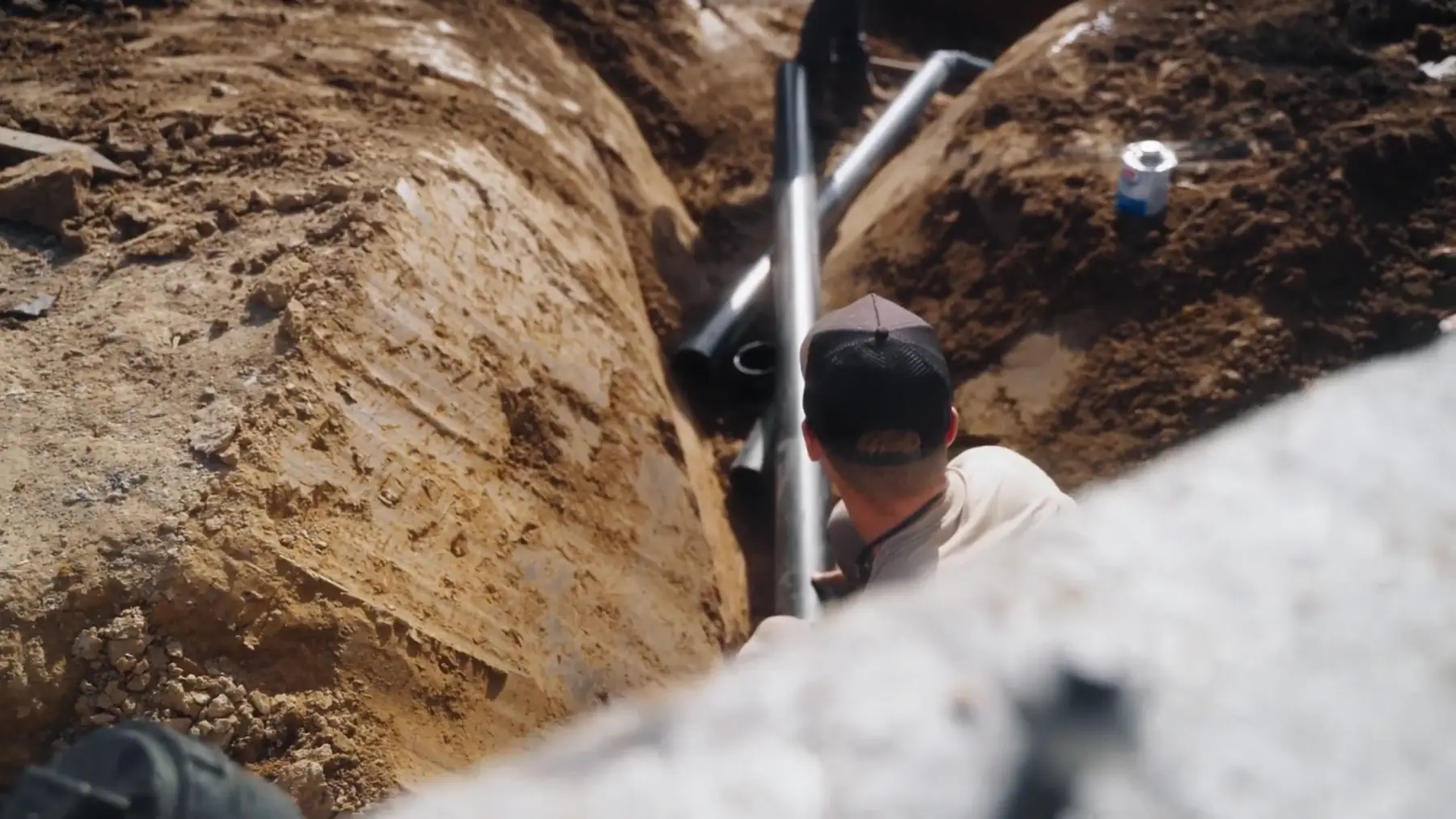
For trench work, ask who the competent person is. A competent person is someone trained to spot trench hazards who has the power to fix them. WAC 296-155-655 says a competent person must stay on the job site any time trench work is being done. That person must also inspect the excavation daily, before work starts.
There is a newer rule too. Since June 1, 2026, the employer must have a competent person fill out a written trench excavation work plan. It applies to a trench a worker may enter where a protective system is required. The plan must be on site for L&I to see. Ask for a copy. More in trench safety rules in Washington.
What about stormwater and trucks?
If the site has a state Construction Stormwater General Permit, ask for the sub’s CESCL card. CESCL stands for Certified Erosion and Sediment Control Lead. The Department of Ecology says the permit requires site inspections by a CESCL. Certificates last three years from the training date, so check the date.
For trucks, ask for the USDOT number. Look it up on the federal SAFER Company Snapshot. The snapshot shows the company’s safety rating if it has one, its roadside inspection summary and crash information. Ours is USDOT 1797155.
Our commercial excavation page covers the civil work we do for general contractors.
Do this now
- Search the sub’s registration number on L&I’s Verify tool. Print the page with the date.
- Open the workers' comp part of that record and print the Certificate of Coverage.
- Fill out an L&I tracking request for the sub.
- Ask for the certificate of insurance and the additional insured endorsement.
- Ask for the written accident prevention program, the name of the trench competent person, the CESCL card and the USDOT number.
More questions
How often do I need to recheck a sub’s workers' comp account?
At least once a year. RCW 51.12.070 says to verify within a year before letting the contract and at least once a year after.
Can my sub’s crew sit in on my safety meetings?
Yes, with your permission. A note in WAC 296-155-110 lets subs meet the weekly crew meeting rule by attending the prime contractor’s meeting.
Does one check cover a master service agreement?
The statute treats a master service agreement like a contract. Verify within a year before you let it, then at least once a year.
Sources
- RCW 51.12.070: Work done by contract, subcontractors (read November 23, 2026)
- Washington L&I: Avoid Liability for Your Subcontractor’s Unpaid Workers' Comp Premiums, publication F262-262-000 (read November 23, 2026)
- RCW 18.27.020: Registration required, prohibited acts (read November 23, 2026)
- WAC 296-155-110: Accident prevention program (read November 23, 2026)
- WAC 296-155-655: General protection requirements for excavations (read November 23, 2026)
- Washington Department of Ecology: Certified Erosion and Sediment Control Lead (read November 23, 2026)
Written by Lindberg Pipe & Grade, an excavation contractor in Vancouver, WA since 2008, from the agency pages and codes listed above. Rules and fees change. This is general information, not legal or engineering advice, so check with the permit office for your address before work starts.