Short answer
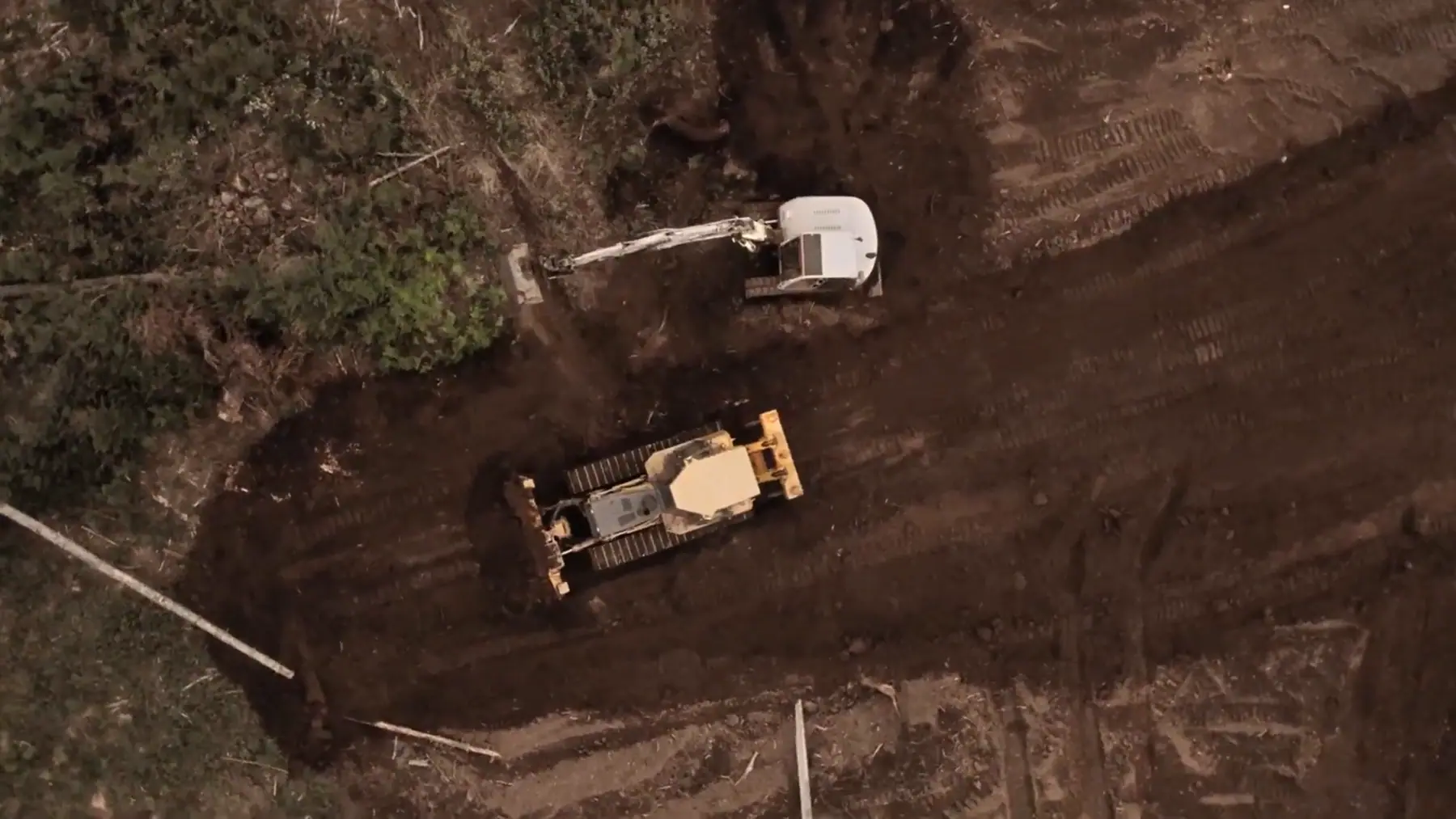
Yes, but only with its own approval. In Vancouver, grading before building permit approval needs a grading permit. In unincorporated Clark County, the foundation exemption covers only a structure that is already permitted. Early grading over 50 to 200 cubic yards needs a grading permit. Tree, erosion and critical area rules apply first.
Can I start early inside Vancouver city limits?
Yes, if you get a grading permit first. As of November 2026, the City of Vancouver lists “grading work requested prior to obtaining building permit approval” as work that needs a grading permit. That line is in the city’s grading permit application.
The form has a box for it. Under “Type of Work” you can check “Early Start Grading/Prior to Civil Approval.”
The city’s general trigger is low. A permit is required for nearly all projects that disturb or move more than 10 cubic yards of earth or vegetation. Clearing a lot and cutting a pad will pass that on almost any site.
Two limits come with early grading in the city:
- No storm work can be done on a grading-only plan. Storm pipes and basins wait for the full plans.
- All grading over 500 cubic yards requires a SEPA checklist. SEPA is the state’s environmental review.
Codes change. Confirm with the city Permit Center before you schedule equipment. The full city thresholds are in do I need a grading permit in Vancouver, WA.
Can I start early in unincorporated Clark County?
Yes, with a county grading permit if you pass the volume threshold. Clark County Code Chapter 14.07 exempts “excavation for construction of a structure permitted under this code.” Before the house permit is issued, that exemption does not fit yet.
So the normal thresholds apply. A permit is needed over 50 cubic yards on an urban site under one acre. It is over 100 on a larger urban site or a rural site under five acres. It is over 200 on a rural site of five acres or more. In a critical area, it is over 50 anywhere.
The code also says an engineering review of the grading application is required before any work under the chapter.
Approval is not the last step. The county’s Grading and Drainage Review handout says field work may begin after the preconstruction conference. That is a meeting with the county inspector before work starts.
Not sure if your lot is city or county? See Vancouver or Clark County: whose grading rules apply.
Can I at least clear the trees and brush?
Not without checking the tree rules first. In the city, the answer is on the Tree Permits page. It says a permit is required for removing trees on private property. On undeveloped properties, a Level III, VI or VII tree removal permit is required, depending on the activity.
The city also says that starting work without a permit will result in a violation and fines.
Trees in or near a wetland, stream corridor, priority habitat or steep slope need more. The city requires a Critical Areas permit for removal there.
In the county, clearing counts as land-disturbing activity under the grading code. That means the county’s stormwater and erosion control rules apply to it. Before you log a county lot you plan to build on, ask the county about forest practices rules too. Cutting first can limit what you can build later.
Our article on tree removal permits in Vancouver covers the city tree rules.
What has to be approved before the machines show up?
Work down this list. Each item can stop a job.
- The grading permit. City or county, as above.
- Erosion control. The city wants erosion control measures drawn on the grading plan. The county requires a stormwater site plan and an erosion control plan with the grading application.
- Trees. A city tree removal permit, if you are in the city.
- Critical areas. In the city, grading in or next to steep or unstable slopes, wetlands or creeks needs a Critical Areas Permit, no matter the volume.
- SEPA. In the city, over 500 cubic yards. In the county, the code says grading in a critical area, or over 1,000 cubic yards outside one, may be subject to SEPA.
- Archaeology. In the county, stand-alone grading over 500 cubic yards falls under the county’s archaeology rules, even if it is exempt from SEPA.
- State stormwater permit. The city notes that a state Construction Stormwater General Permit is required when one acre or more is disturbed. It applies when stormwater reaches surface water or storm drains.
Utility locates through 811 come before any digging too. Our FAQ covers who makes that call.
For more on the reviews, see will my lot need SEPA or critical areas review.
Is early grading worth the risk?
It can save time, but the risk is yours. You are shaping the ground before the house plans are approved. If the plans change, the pad may be in the wrong place or at the wrong height.
Three rules make that risk real:
- In the county, any grading not shown on the approved grading plan is not approved. Changes need a plan revision before the work starts.
- In the county, all fill that will support a structure needs an “Engineered Grading” application. A licensed engineer or geologist prepares that plan.
- In the city, the storm system cannot go in under the early grading permit.
A county grading approval also expires one year from the approval date unless construction starts.
If you hire out the site prep and grading, ask the excavator three things. Which permits does the early work need? Who applies for each one? What happens to the price if the house plans change? Get the answers in the bid.
Do this now
- Look up the parcel in the Clark County Property Information Center and note the Jurisdiction.
- Open the Environmental tab and note any slope, wetland, habitat or flood flags.
- Estimate the early work in cubic yards. Multiply length by width by depth in feet, then divide by 27.
- Count the trees that would come out and ask the city or county which tree rules apply.
- Call the permit office for your jurisdiction. Ask what must be approved before clearing and before grading.
More questions
Once my county house permit is issued, do I need a separate grading permit for the foundation?
No. The county code exempts excavation for construction of a structure permitted under the code. Stormwater and erosion control rules still apply to the work.
Does a city house permit cover the foundation dig?
Only on simple sites. The city requires a separate grading permit unless the dig is 50 cubic yards or less and meets six other conditions.
Can I stockpile soil on the lot while I wait?
In the city, stockpiling on site needs a grading permit. In the county, a stockpile that is not part of an approved project is limited to 18 months. Over the grading thresholds, it needs a grading permit.
Sources
- City of Vancouver: Site Development, Grading Permit application, revised 5/05/2025 (read November 23, 2026)
- Clark County Code Chapter 14.07: Grading, Excavation, Fill, and Stockpile (read November 23, 2026)
- Clark County Development Engineering: Grading and Drainage Review handout, revised 8.25.25 (read November 23, 2026)
- City of Vancouver Urban Forestry: Tree Permits (read November 23, 2026)
Written by Lindberg Pipe & Grade, an excavation contractor in Vancouver, WA since 2008, from the agency pages and codes listed above. Rules and fees change. This is general information, not legal or engineering advice, so check with the permit office for your address before work starts.