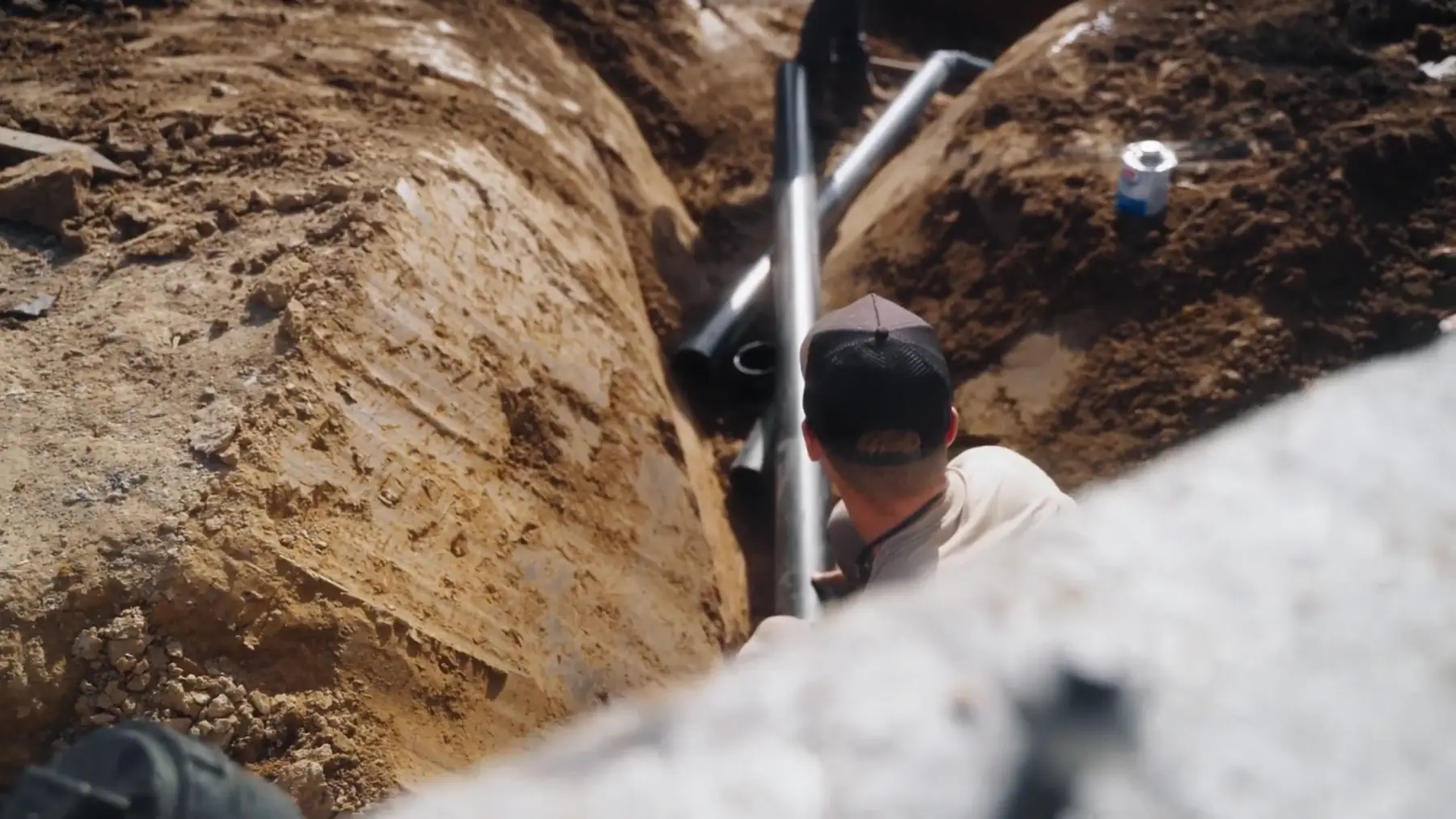
Short answer
No. In Washington, 811 sends your request to the utility companies, and they mark the lines they own for free. State law puts lines you own on your own property on you. You must ask for marks at least 2 full business days before digging. This applies to anyone who digs in Vancouver or Clark County.
What does 811 mark, and what does it skip?
811 marks lines that belong to a utility. It skips lines that belong to you.
When you call, the request goes to each utility with lines near your dig. Each one sends a locator to paint or flag its own lines. Under RCW 19.122.030, that marking is free.
The same law covers the other side, as of November 2026. It says the customer is “responsible for locating on their own property the underground facilities that they own.” The law also makes you responsible for finding a sewer, water or storm service line on your own property.
The state utilities commission says it plainly. Private lines “will NOT be marked by public utility companies,” according to the Washington UTC.
Laws change. Check the current rule with the UTC, which enforces the dig law, before you dig.
Which lines on my lot are private?
Most lines that run past the meter, or past the point where the utility hooks up, are yours. The UTC lists these examples of private lines:
- Electricity to an outbuilding, like a shop or detached garage
- Septic systems
- Invisible pet fences
- Heating lines for a pool
- Some fiber optic lines and satellite dish lines
Other common ones follow the same idea. Sprinkler pipes, yard lights, a propane line from a tank, and a water line from a private well were not put in by a utility. No utility will come mark them.
Your sewer line is a special case. The pipe from your house to the main is often called a side sewer. The part on your property is yours to find. The utility only has to show where service lines sit in the street or in a utility easement. An easement is a strip of land a utility has a right to use.
Water is similar. The law lets a water utility skip marking a water service line if a meter or valve cover shows where it is.
Who has to call 811, and how early?
The person doing the digging has to call. The law calls that person the excavator. If you rent a trencher and dig yourself, that is you. If you hire a contractor, it is the contractor.
Here are the timing rules in RCW 19.122.030:
- Give notice at least 2 full business days before you dig, and no more than 10.
- Weekends and legal holidays do not count as business days.
- Mark the edge of your dig area in white paint or white flags first.
- Since January 1, 2026, you cannot start until every utility in the area has responded.
A general contractor can place the request for the digger. The digger still carries the legal duty.
There is one small exception for owners. RCW 19.122.031 exempts a dig less than 12 inches deep on private, noncommercial property. The owner or occupant has to be the one digging. That exception does not make shallow lines safe. Cable and sprinkler lines are often shallow.
On our jobs, the call is ours to make. Our FAQ covers that.
How close can I dig to the paint marks?
Treat the ground within 2 feet of a mark as hand-dig only. State law says a mark is accurate if it is within 24 inches of the outside edge of the line. That is 24 inches on each side.
The UTC gives the working rule. Within two feet of the marked area, use only small hand tools to expose the line with care.
Marks do not show depth. The law says locators are not required to mark how deep a line is. Never trust a guess about depth.
How long do the marks last?
Marks expire 45 calendar days after the date you gave notice. If you are still digging after that, you need a new request.
Keep the marks visible while you work. The digger is responsible for keeping them accurate. A utility can charge you for repeat visits if you let them get wiped out.
How do private lines get found?
You hire a private locator, or you find them from records. A private locator is a company that traces lines for a fee. The law tells the 811 service to keep a list of private locate providers. Ask 811 for that list.
Other ways to find private lines:
- As-built drawings. These are plans that show where pipes were laid. Ask the builder, the past owner, or the permit office.
- Septic records. Ask Clark County Public Health if it has a record of your system.
- A sewer camera. A camera run through the pipe can carry a locating signal. A locator on the surface follows it and marks the route.
- Tracing from both ends. A locator can clip a signal onto a wire or metal pipe at the house and follow it.
- Hand digging. Careful digging by hand, called potholing, exposes a line so you can see it.
Plastic pipe with no tracer wire is hard to trace. A camera or potholing may be the only way.
If you are hiring out underground utility work, tell your contractor about every private line you know of. Ask who pays for private locating, and get the answer in the bid. Planning a new sewer hookup? See who connects a house to sewer in Clark County.
Do this now
- Sketch your lot. Draw every line you know runs past a meter: shop power, sprinklers, septic, propane, yard lights.
- Mark your dig area in white paint or white flags.
- Call 811 or use the Washington 811 website at least 2 full business days before you dig.
- Ask 811 for its list of private locators if your sketch shows private lines in the dig area.
- Wait for every utility to respond. Then hand dig within 2 feet of any mark.
More questions
Is calling 811 free?
Yes. Utilities must mark their own lines free of charge under RCW 19.122.030. Private locating is a separate paid service.
What if I hit a line anyway?
Stop digging. State law says to notify the utility and 811, and to call 911 if there is an emergency. Do not bury a damaged line.
What if I find a line nobody marked?
Stop digging near it and tell 811 right away. RCW 19.122.030 requires that.
Does Oregon work the same way?
Oregon and Portland have their own rules. Check with Oregon 811 before you dig there.
Sources
- Washington Legislature: RCW 19.122.030, Excavator and facility operator duties before excavation (read November 23, 2026)
- Washington Legislature: RCW 19.122.020, Definitions (read November 23, 2026)
- Washington Legislature: RCW 19.122.031, Exempted activities (read November 23, 2026)
- Washington Utilities and Transportation Commission: Call Before You Dig (read November 23, 2026)
Written by Lindberg Pipe & Grade, an excavation contractor in Vancouver, WA since 2008, from the agency pages and codes listed above. Rules and fees change. This is general information, not legal or engineering advice, so check with the permit office for your address before work starts.